

Introduction
Dreamstate is a role playing game (RPG) system and a board game hybrid that is currently in development by Chevas Balloun. You can read about how it started, but in essence the unique vision of Dreamstate is:
- A tabletop RPG game that is visual, structured, and competitive (like a board game)
- A game that tells a rich story in which the players participate and help shape
- A lengthy dungeon crawl with the freedom to explore, engage in combat, trade, and solve puzzles.
- A game with special encounters that require strategy, force competition, and can overturn advantages
- Originally designed as a physical tabletop RPG where players do not need pen or paper, but still offers extensive character progression, converted into a digital play experience
- A game that a 10 year old would understand with a depth that appeals to adults
- A pre-written campaign that is easy for a Game Master (GM) to run with little to no prep time required
- Game tiles and assets that could be reusable for homemade campaigns
Dreamstate is Big
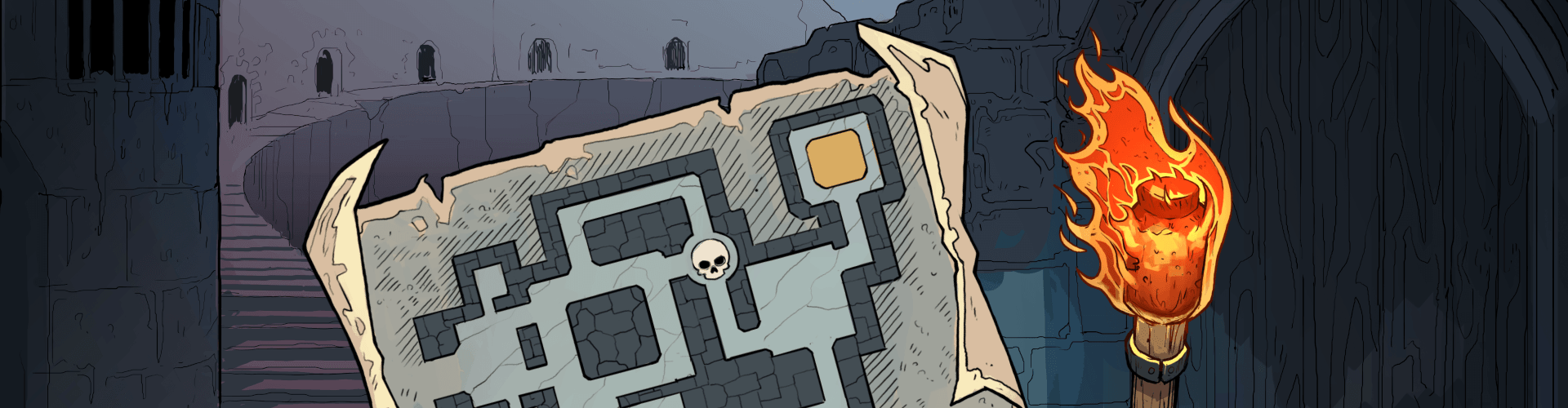
The primary campaign is organized into a series of levels (aiming for 10-12), most of which will require a 2-3 hour session to complete. If your group were to play weekly, the game could last several months.
Getting Started
Dreamstate allows two to 6 players. The game is played with the following game assets:
- Character cards
- Expanded inventory cards (variable sizes)
- Health, Armor, and Shadow placement card
- Character, enemy, and NPC figures
- Dungeon level tiles (3×3 inches)
- Interactive level-object tiles (Mostly 1×1, 1×2, 2×2 inches and some other variations)
- Loot items, treasure, and equipment tiles (1×1, 2×1, 2×2, 3×1 and some other variations)
- Ability, skill, and talent cards (standard playing card size)
- Dungeon Point, Fame Point, and Status Effect Cards
- Story cards (standard playing card size)
- Counting tiles, dice, and various tokens
A Hostile Game Master
The Game Master (GM) is a competitive player who functions as the primary enemy and controls all the enemies in the game. In general, players and the GM will compete for points throughout the campaign.
While players are equipping items to their character sheet to strengthen their stats, the GM equips enemy cards on their character sheet AND items on the enemy cards. The GM’s character sheet stats augment the abilities of all the enemies they control. The GM’s dice rolls and character sheet are publicly visible to all players.
Character Cards—Choosing a Class
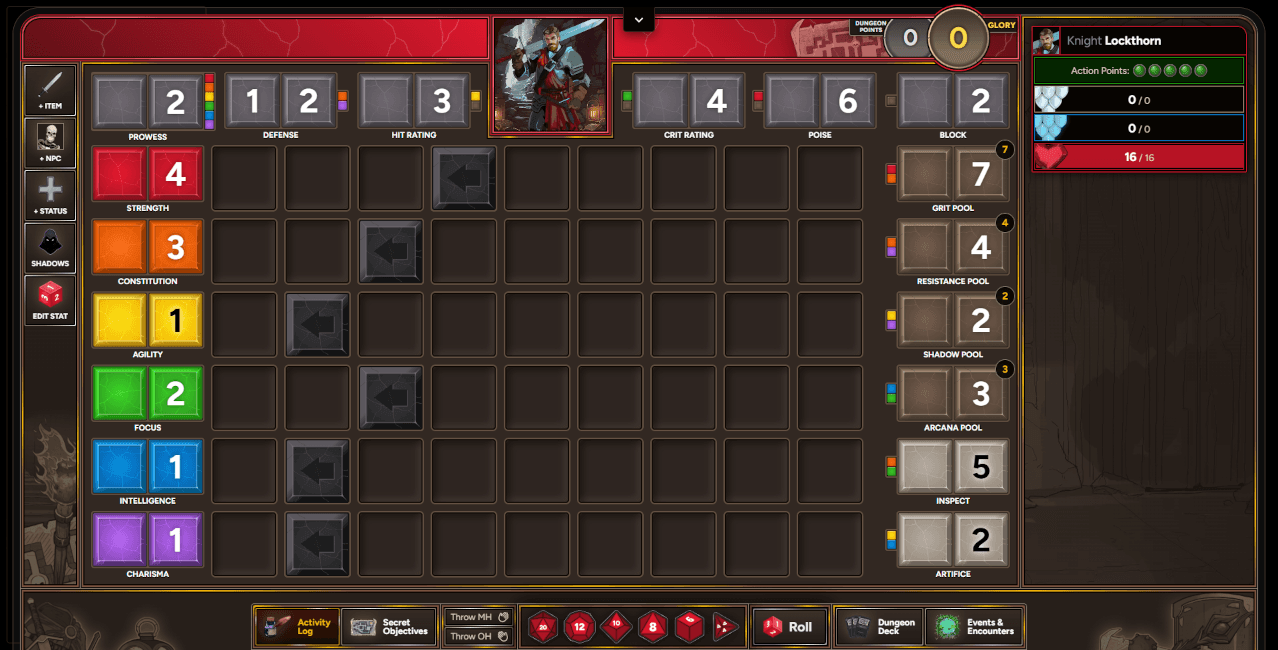
Players will choose a class which has pre-defined starting attribute values and available equip squares in a predefined orientation. At launch, Dreamstate will offer five classes:
- Hunter
- Knight
- Mage
- Rogue
- Bard
The primary differences between the classes are their starting attributes and the kinds of Treasure of Renown each need to convert into points. Treasure of Renown are unique items that convert to Dungeon Points and ultimately Glory. There are 5 Treasure of Renown and each class can only earn points from two of them. Each class will also have a few unique mechanical abilities that are earned throughout the campaign. The restrictions on classes are sparse, so players are free to build hybrid classes as they wish. Obtaining skill books from the various Skill Schools, upgrading the relevant attributes that best suit skill schools, and equipping the relevant items are the primary methods for developing your unique character. Character development is further explained in the Character Progression section.
The Goal
Players’ ultimate goal is to defeat the Game Master who controls Arkhaven. Arkhaven is the mysterious sunken city of the ancient era and is the setting for the primary campaign. The Game Master’s ultimate goal is to defeat the players in the final encounter.
The Dungeon
Continuing reading on The Dungeon page.